
How Oil Exports Will Boost Ugandan GDP
Ugandan President Yoweri Museveni officially unveiled and launched Uganda’s national crude oil branded as the “Pearl Sweet” in September 2026. As Uganda implements in National Development Programme (NDP.IV) from 2026-2030, there is heightened expectations that the oil exports will exponentially boost its Gross Domestic Product (GDP). Uganda has commercial 1.65billion barrels (bbl) of crude oil in the Albertine Graben region.
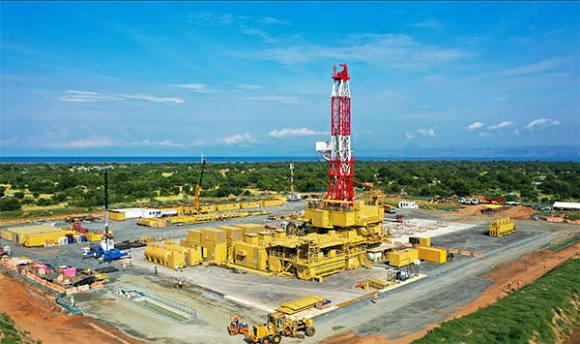
The peak production from the Tilenga and Kingfisher oil fields is 230,000 bbl/day initially to be exported via the 1400-km East Africa Crude Oil Pipeline (EACOP) to a port in Tanga, Tanzania.
Assumptions:
(a) Production capacity of 50000 barrels (bbl)/day for the second half of the financial year 2026/27
(b) Annual production increasing at a rate of 18%
(c) Non-stop production of crude oil throughout the year, 365 days
(d) Average crude oil price of USD90/bbl
(e) Uganda nominal GDP will grow at 14.8% per annum in order to achieve the 10-fold growth ambitions.
| Financial year | Daily production (bbl) | Annual production (bbl’M) | Average price bbl | Gross oil exports (USD’m) | % of gross oil exports to GDP | % of gross oil exports versus all exports |
| 2026/27 | 50,000 | 18 | 90 | 1,643 | 2% | 9% |
| 2027/28 | 118,000 | 43 | 90 | 3,876 | 3% | 18% |
| 2028/29 | 139,240 | 51 | 90 | 4,574 | 4% | 18% |
| 2029/30 | 164,303 | 60 | 90 | 5,397 | 4% | 17% |
| 2030/31 | 193,878 | 71 | 90 | 6,369 | 5% | 17% |
| 2031/32 | 228,776 | 84 | 90 | 7,515 | 5% | 18% |
Source: Author’s model based on above assumptions.
In the first full year 2027/28, the projected gross oil proceeds are USD3.87billion, translating into 3% of the GDP and 18% of the total exports of Uganda. Gross proceeds represent the cumulative amount that Uganda is projected to collect from the Pearl Sweet exports. However, the exact Government of Uganda (GOU) revenue will be based on the production-sharing agreement between GOU and the oil majors (Total Energies EP and CNOOC). The GOU share is to be deposited into the Petroleum Fund, and thereafter some of that money can be invested. Uganda also has an ambition of constructing an oil refinery to add value to the crude oil. A revised production-sharing agreement shall be inevitable to ring-fence some of the production for the refinery and a portion for export via the EACOP. The pipeline cost is estimated at USD4billion, with commissioning slated for the year 2030.
Conclusion:
The crude oil exports will contribute 2-5% towards the Ugandan GDP. This is dependent on many variables including the future world crude oil prices, the performance of other Ugandan exports, the robustness of the oil production facilities and the efficiency of the pipeline to avoid leakages and disruptions.


